Why Smaller Sized Senior Care Residences Are the Future of Compassionate Dementia Care
Business Name: Hearthstone South Weber
Address: 6980 S 475 E, South Weber, UT 84405
Phone: (385) 380-3382
Hearthstone South Weber
Our assisted living and memory care community sits in a quiet South Weber neighborhood at the mouth of Weber Canyon, minutes from Ogden Regional Medical Center and close to family across Davis and Weber counties. We offer Assisted Living private studio apartments for seniors who want independence with a helping hand: medications, bathing, dressing, meals, and housekeeping. We also provide Memory Care secure, calm setting with structured routines and 24/7 supervision for residents living with Alzheimer's disease or other dementia. We've cared for residents here since 2019, with attentive caregivers, home-cooked meals, and a calendar full of things to look forward to.
6980 S 475 E, South Weber, UT 84405
Business Hours
Families rarely plan for dementia care. It normally gets here as a slow series of "little" modifications: a pot left boiling, a forgotten appointment, a parent who always liked hosting supper now declining to leave your home. In the beginning, everybody informs themselves it is normal aging. Then, almost overnight, it is not.
I have actually sat at lots of kitchen area tables with partners and adult children staring at a blank note pad, trying to find out whether assisted living, memory care, respite care, or personal in home assistance is the next right step. The hardest part is not the medical language. It is the fear that your loved one will end up being lost in a system that treats them like a medical diagnosis, not a person.
That worry is what pushes more families and experts towards smaller sized senior care homes, especially for dementia care. These homes are not a pattern. They are a reaction to what has not worked in standard big centers, and a peaceful return to something older and really human: care developed around relationships, not buildings.
What "Smaller sized Senior Care Residences" Really Are
People utilize various names: residential care homes, board and care, adult household homes, small group homes, or merely "your house on Maple Street that takes six citizens." The terminology differs by state, however the core concept is similar.
A smaller senior care home usually:
- Serves a limited variety of homeowners, frequently in between 4 and 16.
- Operates in a home or home-like building, not a large campus.
- Offers assisted living level assistance, sometimes with dedicated memory care.
- Provides 24/7 staffing, however with fewer layers of management and less institutional structure.
Licensing classifications vary. Some are licensed as assisted living, some as adult care homes, some as specialized dementia care. In lots of states, these homes can offer innovative dementia care, consisting of behavioral support, support with all activities of daily living, and end of life care, as long as they fulfill regulative standards.
Families often presume "small" suggests "less capable." In practice, when done well, small often indicates more versatile, more personal, and more aligned with what life with dementia in fact looks like.
Why Standard Large Facilities Battle With Dementia
Large senior care communities have strengths. They can use on site physical treatment, robust activity calendars, multiple dining locations, and on call nursing. For some older grownups who are still relatively independent, that environment works extremely well.
For advanced dementia care, however, size becomes a liability.
The initially difficulty is sensory overload. Numerous memory care wings are developed as safe and secure systems within huge assisted living structures. Homeowners leave of their spaces into a bright, hectic corridor, with paging systems, cleaning carts, staff rushing to address multiple call lights, and televisions running throughout the day. For a brain already having a hard time to filter details, this unrelenting stimulation can feel like an assault.
The 2nd obstacle is staffing patterns. In a big memory care system of 30 homeowners, you might see 2 to 3 caregivers on the floor plus a nurse, often less on graveyard shift. Even when everybody is qualified and caring, their attention is stretched thin. Arranged tasks take priority: early morning care, medications, meals, assisted toileting. Quiet psychological needs, subtle modifications in habits, or the early signs of a urinary infection can be easy to miss until they become crises.
The 3rd obstacle is institutional culture. Once an environment operates at that scale, it typically depends on rules and routines to keep things safe and organized: set awaken times, repaired showers days, large group activities, stiff medication passes. These routines are not inherently bad, but dementia does not follow a schedule. The person who sundowns may be most relaxed at 10 p.m. The resident who was always a night owl does not suddenly end up being a "lights out at 8" individual. Big systems struggle to bend around individual histories.
Over time, I have actually seen how these structural limitations translate into human pain: citizens labeled "resistant" or "agitated" because they retreat in crowded dining spaces, or households pressed to start antipsychotic medications for behaviors that may respond to quieter surroundings and more constant one to one connection.
Smaller homes are not a magic repair, but they have more space to focus on the rhythms of real life over the requirements of a big operation.
How Smaller sized Homes Change the Dementia Care Experience
Picture two different mornings.
In the very first, a caretaker working in a 40 bed memory care system begins at 7 a.m. They have 10 citizens to get up, dressed, and to breakfast before the kitchen closes its early seating. They knock, turn on lights, encourage individuals to rush, and try to keep everyone moving while relaxing those who resist. They are doing their finest, but speed is the hidden rule.
In the second, a caregiver in an 8 bed residential home walks into the common area at 7 a.m. Two homeowners are currently awake, sitting by the window. They start coffee, turn on some soft jazz, and sit for a couple of minutes while everyone totally gets up. Breakfast occurs over an extended window. One resident likes toast at 7, another prefers eggs at 9 when she finally wanders out in her bathrobe. The caregiver changes as they go.
The variety of homeowners is the most apparent difference, but the much deeper shift is in how time works. Little homes can move at human speed.
For dementia care, this versatility changes whatever:
Residents experience less forced shifts in a day. Staff can approach care tasks when the person is more receptive, not simply when the schedule demands it. And that, in turn, often minimizes the agitation therefore called "behavior issues" that drive medication usage and medical facility transfers.
Relationship as the Core Treatment
Documents list "dementia care" as a service line, but what assists most people with dementia is not a program. It is relationship.
In a smaller home, personnel usually look after the exact same little group of locals day after day. They learn who utilized to work swing shift and chooses late nights, who soothes when you talk about their old garden, who will just take medications if you sit beside them and chat initially. Dementia impacts memory and language, but it does not remove an individual's requirement to be known.
Families often tell me that in bigger settings they seemed like "just another chart." They had to reintroduce their parent's story to every turning caregiver. In little homes, I have viewed caretakers and citizens establish a peaceful shorthand that looks like domesticity: a hand instantly grabbing the right sweater, an employee humming an old hymn while assisting somebody with a bath, an appearance that states "it's time for your afternoon walk" without a word spoken.
That connection matters for security too. The caretaker who has invested months with your mother will observe that she is simply a bit quieter today, or taking shorter steps, or choosing at her food. Subtle changes like that are often the earliest signs of infection or discomfort. In my experience, smaller homes tend to catch those shifts previously, not because they have more technology, but due to the fact that they have more eyes that really understand each person.
Emotional Security for Locals Who Are "Excessive" for Larger Facilities
One of the hardest telephone call families get is the notification that their loved one is being "released" from a memory care community for habits. Perhaps he was roaming into other rooms, or she started out at a caregiver during a shower, or he began chewing out night. From the center's point of view, they should keep everybody safe. From the household's point of view, it seems like rejection at the minute they most require help.
Smaller homes often focus on exactly these scenarios. With fewer locals and a calmer environment, they can approach tough behaviors with more imagination and patience. Instead of stating, "Mr. Thompson is combative," I have actually heard staff say, "He gets terrified when 2 individuals approach him simultaneously. Let me attempt going in alone and speaking about his old truck initially."
There are fewer strangers reoccuring, which can lower paranoia and mistrust. Restrooms and bedrooms are close by, so people do not have to navigate long corridors when they are currently disoriented. Alarms and video cameras, when used, can be more discreet. The environment is less like a locked unit and more like a safe home.
This does not suggest small homes can or must accept every habits. Severe hostility, extreme psychiatric conditions, or intricate medical requirements may still require specific settings or health center based geriatric psychiatry. The difference is that small homes often have more choices to adjust day-to-day routines, customize care methods, and collaborate with outdoors clinicians before choosing a relocation is necessary.
The Role of Routine, Familiarity, and Environment
Dementia diminishes a person's world. New places, loud noises, and regular staff changes can feel overwhelming. A smaller sized senior care home minimizes the number of variables an individual needs to process every day.
Environmentally, the differences are basic however powerful:
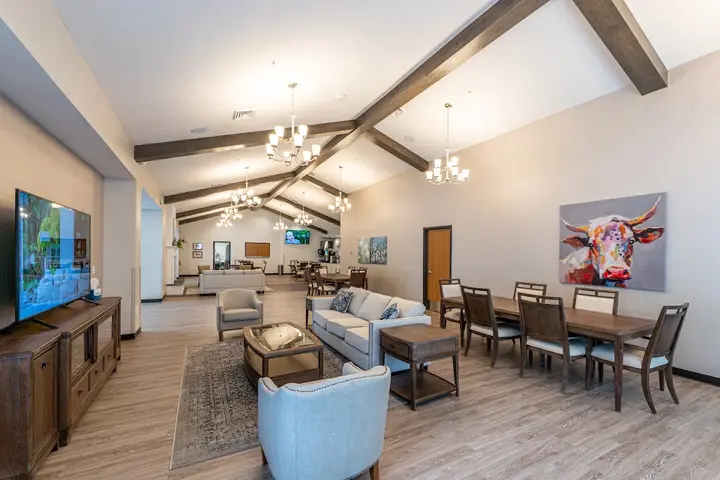
Rooms in little homes usually open into a main living area, not a long passage. Citizens can see the kitchen area, smell food cooking, and orient to daily life with their senses, even if their memory is fading. There are less doors that all look the same, so individuals are less most likely to get lost trying to find the bathroom.
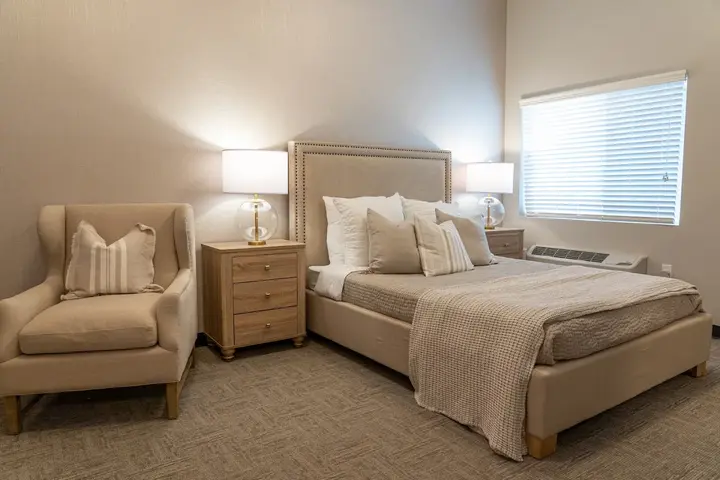
Furniture tends to look like it came from a genuine home. Upholstered chairs. A table where everybody can see each other. Possibly a pet bed in the corner. This is not simply ornamental. It cues the brain: this is a safe location where individuals live, not visit.
Routine establishes more naturally. Breakfast might happen in waves. Some locals prefer to watch the exact same television program every afternoon. Staff can keep those little habits that hold significance. Dementia care research study has shown that protecting familiar patterns, even in small methods, decreases stress and anxiety and can slow the spiral of functional decline.
The point is not to create a phony "1950s neighborhood" theme. The point is to develop a genuine environment where daily life looks, sounds, and smells like living, not like being warehoused.
Staffing Truths: Ratios, Turnover, and Burnout
Families typically ask me for a single number: "What staff ratio should I try to find?" The truthful answer is that ratios alone do not ensure quality. I have seen 1 to 5 ratios in big settings that still felt hurried, and 1 to 10 situations where steady, highly experienced caretakers provided excellent care.
That stated, smaller sized homes typically operate with structurally lower ratios, often 1 staff to 4 or 6 homeowners during the day, particularly in memory focused homes. Night staff might be one awake caregiver for 6 to 8 citizens, periodically 2 for higher acuity homes. Because everybody shares the very same typical space, a single caretaker can keep eyes on folks while cooking breakfast or folding laundry.
Equally essential is how personnel feel about their work. In big centers, caregivers frequently report feeling like they are on an assembly line. They may care deeply about locals, however they seldom have time to stop and talk. Burnout follows, and with burnout comes turnover, which then destabilizes residents.
In smaller sized senior care homes, caregivers often describe their environment as "more like household." They tend to do a broader range of jobs: cooking, cleaning, personal care, companionship. For some workers, that is a downside; they prefer the clear job boundaries of a big center. For others, especially those drawn to relationship focused dementia care, it is a significant benefit.
Lower turnover brings consistency. Citizens with dementia cope much better when they see the exact same faces every day. Families have a single, familiar person they can call and trust. And supervisors can coach personnel on sophisticated dementia methods understanding those skills will stick to the same team.
Of course, there are exceptions. Some little homes are poorly run, understaffed, or underpaid, which causes their own turnover issues. The little size does not inherently fix weak management. This is why on website visits, discussions with staff, and frank concerns about turnover matter more than shiny brochures.
Cost, Value, and Trade Offs
One unpleasant reality: high quality dementia care is expensive in almost any setting, mainly due to the fact that it is labor intensive. Smaller homes can be more economical than luxury assisted living memory care systems, but they are seldom cheap.
Pricing designs in little homes vary. Some charge a flat regular monthly rate that consists of room, board, and care. Others have a base rate plus tiered care charges based upon how much assistance a resident needs. Many private pay homes fall anywhere from the mid 3 thousands to 8 thousand dollars monthly or more, depending upon area and level of care.
Where households frequently see worth is in fewer "concealed" costs. In large assisted living, the marketing rate may look workable, however surcharges for medication administration, escorts to meals, or incontinence support can rapidly add thousands each month as dementia progresses. In small homes, those supports are usually bundled into the core service.
Medicaid protection is complicated. Some states have waiver programs that pay for residential care homes or adult family homes. Others restrict Medicaid to nursing homes or require particular agreements with smaller companies. Veterans benefits, long term care insurance, and state specific subsidies can likewise play a role. It is necessary to ask each home, "How many of your locals are private pay, Medicaid, or other funding sources?" and "What takes place if my loved one invests down their cost savings?"
There are trade offs. A smaller sized home will not have on website physical therapy gyms or numerous restaurants. If your loved one is highly social, they may miss the range of activities that a large campus can provide. If they still delight in huge group occasions, smaller settings may feel too quiet.
For moderate to sophisticated dementia, however, those large scale facilities frequently go unused, while the quiet attention of a caregiver who genuinely knows your loved one ends up being priceless.
When a Larger Setting May Make More Sense
The goal is not to glamorize small homes as the right answer for everyone. There are situations where a larger senior care neighborhood may be a better fit.
If your loved one remains in the early stages of cognitive decline, still independent in most day-to-day jobs, and yearning robust social interaction, a bigger assisted living neighborhood with strong memory support programs might be perfect. They can sign up with film nights, exercise classes, and trips while having assistance in the background.
People with very complex medical needs, such as frequent IV treatments, advanced injuries, or ventilator support, typically need skilled nursing facilities. Some small homes partner closely with home health and hospice agencies, but they are not medical facilities. It is necessary to clarify what medical services they can realistically handle.
Geography matters too. In rural regions, there may be just one or two little homes within reasonable driving distance, and they may be full. Bigger facilities often have more availability and more transportation options for appointments.
The secret is to match the environment to the person's stage of dementia, health profile, history, and personality. Smaller homes shine particularly for people who:
- Are easily overwhelmed by noise or crowds.
- Have moderate to advanced dementia with substantial care needs.
- Have experienced behavioral problems or "failed positionings" in bigger memory care settings.
What to Try to find When Evaluating a Small Dementia Care Home
Walking into a residential care home informs you more than any pamphlet. A quick psychological list on your first visit can help you focus on what genuinely anticipates quality.
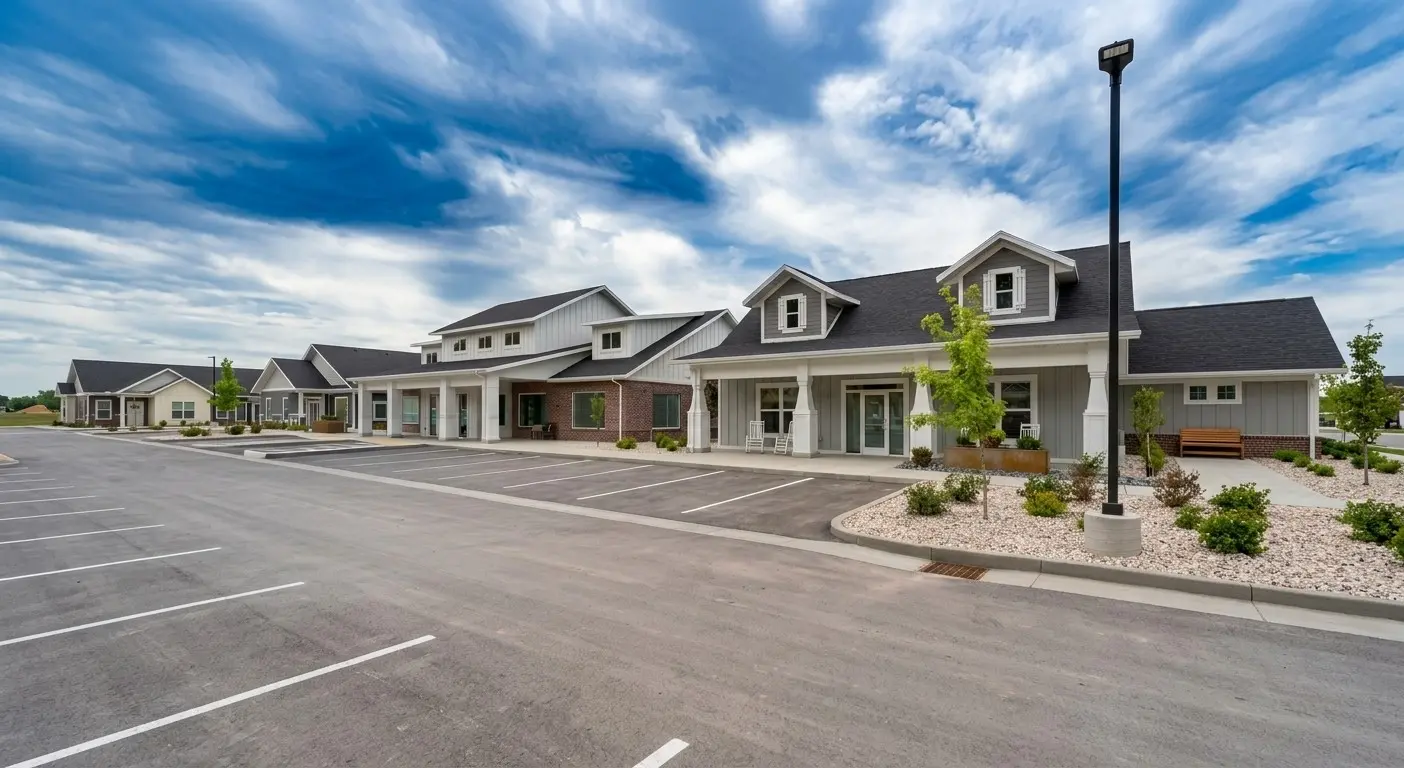
- Atmosphere: Do you seem like you are walking into a home or a mini institution? Are homeowners out in the typical areas, doing ordinary things, or separated in rooms and strapped in front of televisions?
- Staff interactions: View how caretakers talk to homeowners. Do they utilize people's preferred names? Do they speak respectfully, at eye level, without hurrying? Notification body movement, not just words.
- Cleanliness and safety: Are floorings clear, restrooms available, and grab bars well positioned? Does the house odor reasonably clean, not greatly masked with air freshener?
- Flexibility of routine: Ask how they handle citizens who sleep late, wander in the evening, or resist showers. Do their answers sound useful and personalized, or rigid and rule bound?
- Transparency: Are they open about prices, staffing ratios, training, and how they respond to medical changes or hospitalizations? Vague, evasive answers are red flags.
Returning for an unannounced visit at a various time of day, especially nights, can offer you a more realistic picture. Mornings are often the "finest behavior" window for tours.
Integrating Respite Care and Shift Planning
Smaller senior care homes are also powerful tools for respite care. Caring at home for somebody with dementia is a marathon. Even the most dedicated partner or adult child requires breaks that are longer than an afternoon.
Some residential homes offer short term stays of a week or a month, especially when they have an open space. This permits the person with dementia to experience the environment without making an immediate irreversible move. It likewise gives families a real sense of how personnel deal with challenging behaviors, nighttime requirements, or medical issues.
I have seen families utilize respite tactically:
A child taking care of her father with Lewy body dementia set up a 10 day respite stay every three months. In the beginning he withstood, but personnel at the small home learned his routines and preferred stories. By the 3rd stay, he was greeting familiar caretakers with a smile. When his daughter's health assisted living south weber ut declined and an irreversible move ended up being required, the shift was mild, not abrupt, because the home was currently part of his psychological map.
Early use of respite also develops alternatives. Too many households wait up until a complete blown crisis forces positioning on someone else's terms. Checking out little homes before you are desperate lets you select based upon fit, not accessibility at 3 a.m. After an ER incident.
How Little Residences Collaborate With Households and the Wider Care Team
Dementia care works best as a group sport. That team typically consists of the medical care doctor, neurologist or geriatrician, home health or hospice services, therapists, and of course the family.
Smaller homes tend to include households more straight in everyday decision making. You may get a text with a picture of Dad helping fold towels, or a call asking whether Mom has actually always preferred soft foods. Care plan meetings feel like discussions around a table, not formal conferences in a conference room.
Because layers of bureaucracy are thinner, changes can happen quicker. If you mention that your other half has always listened to jazz while shaving, staff can try adding music to his morning regular the next day. If you notice that your mother appears chillier and more withdrawn on recent visits, the manager can coordinate an anxiety screening with her physician that week.
That said, great little homes likewise set healthy borders. They welcome partnership, however they also protect staff from unrealistic expectations, like continuous texting or day-to-day demands for long phone updates. The very best relationships outgrow shared regard and clear interaction about what each side can provide.
Looking Ahead: Why the Future Is Smaller Sized, Not Colder
Demographic truths guarantee that dementia will form senior look after years. Advances in medication can delay some kinds of decrease, but they do not erase the central fact that more people will live enough time to experience cognitive changes.
Big, multi level senior living schools will continue to exist and serve essential roles. Yet the most humane actions to dementia appear to be relocating the opposite direction: smaller sized, more personal, more home based.
Policy makers are starting to notice. Some states are piloting "Green House" design nursing homes with 10 to 12 citizens, shared kitchen area and living spaces, and universal employees who do whatever from personal care to cooking. Others are broadening Medicaid waivers to pay for adult household homes or little residential designs. These modifications move the system closer to what households already state they desire: settings where their loved ones are treated as next-door neighbors, not space numbers.
For providers, smaller sized homes require a different state of mind. Success rests less on marketing interiors and more on recruiting and maintaining caretakers who genuinely like older adults, particularly those with dementia. Training matters, but so does personality. A team member who can laugh when a resident hides socks in the freezer, instead of scold, is worth more than any costly décor.
For families, the shift suggests asking much better questions. Instead of beginning with "Does this neighborhood have a theater and restaurant?" start with "The number of residents will my mother share this area with?" "Who will understand her story?" "What takes place here at 2 a.m. On a stormy Tuesday when she can not sleep and wishes to go home?"
When those concerns lead you down a quiet residential street to a single story house with a ramp to the front door, drapes in the windows, and a caretaker welcoming you by name, do not let the modest exterior fool you. Inside, reality is unfolding: someone stirring a pot on the stove, somebody assisting a resident find her favorite sweater, someone sitting at the table holding a hand that trembles.
That is what compassionate dementia care looks like when we let scale follow need, rather than the other method around. Which is why the future of senior care, particularly assisted living and memory care, is likely to grow smaller, more local, and more deeply human.
Hearthstone South Weber provides assisted living care
Hearthstone South Weber provides memory care services
Hearthstone South Weber provides respite care services
Hearthstone South Weber supports assistance with bathing and grooming
Hearthstone South Weber offers private bedrooms with private bathrooms
Hearthstone South Weber provides medication monitoring and documentation
Hearthstone South Weber serves dietitian-approved meals
Hearthstone South Weber provides housekeeping services
Hearthstone South Weber provides laundry services
Hearthstone South Weber offers community dining and social engagement activities
Hearthstone South Weber features life enrichment activities
Hearthstone South Weber supports personal care assistance during meals and daily routines
Hearthstone South Weber promotes frequent physical and mental exercise opportunities
Hearthstone South Weber provides a home-like residential environment
Hearthstone South Weber creates customized care plans as residents’ needs change
Hearthstone South Weber assesses individual resident care needs
Hearthstone South Weber accepts private pay and long-term care insurance
Hearthstone South Weber assists qualified veterans with Aid and Attendance benefits
Hearthstone South Weber encourages meaningful resident-to-staff relationships
Hearthstone South Weber delivers compassionate, attentive senior care focused on dignity and comfort
Hearthstone South Weber has a phone number of (385) 380-3382
Hearthstone South Weber has an address of 6980 S 475 E, South Weber, UT 84405
Hearthstone South Weber has a website https://hearthstonesouthweber.com/
Hearthstone South Weber has Google Maps listing https://maps.app.goo.gl/VWbP6MrpzTRbZkoG7
Hearthstone South Weber has an Facebook https://www.facebook.com/hearthstone.south.weber
Hearthstone South Weber won Top Assisted Living Homes 2025
Hearthstone South Weber earned Best Customer Service Award 2024
Hearthstone South Weber placed 1st for Senior Living Communities 2025
People Also Ask about Hearthstone South Weber
What assisted living care and senior care services does Hearthstone South Weber provide?
Hearthstone South Weber provides assisted living care designed to support individual resident care needs through personal care assistance, daily living support, life enrichment activities, and compassionate attentive senior care focused on dignity and comfort in a welcoming home-like residential environment
Does Hearthstone South Weber offer memory care services for seniors?
Hearthstone South Weber emphasizes compassionate senior care that supports residents with varying cognitive and personal care needs, with individualized assistance, meaningful life enrichment activities, and a comfortable home-like residential environment. Families should contact the community to confirm the availability of specialized memory care services
What respite care services are available at Hearthstone South Weber?
Hearthstone South Weber can help families explore respite care services that provide temporary senior care, personal care assistance, daily living support, and opportunities for life enrichment activities while prioritizing individual resident care needs, dignity, comfort, and peace of mind. Availability should be confirmed directly with the community
How does Hearthstone South Weber support daily living and life enrichment activities for seniors?
Hearthstone South Weber focuses on personal care assistance, individualized daily living support, and life enrichment activities that encourage social engagement, independence, and meaningful connections while providing compassionate attentive senior care in a comfortable home-like residential environment
Why do families choose Hearthstone South Weber for assisted living care and senior care?
Families considering Hearthstone South Weber can look for assisted living care that emphasizes individual resident care needs, personal care assistance, meaningful life enrichment activities, and compassionate attentive senior care focused on dignity and comfort, along with a welcoming home-like residential environment and opportunities to discuss memory care services and respite care services based on their loved one's needs
Where is Hearthstone South Weber located?
Hearthstone South Weber is conveniently located at 6980 S 475 E, South Weber, UT 84405. You can easily find directions on Google Maps or call at (385) 380-3382 Monday through Sunday Open 24 hours
How can I contact Hearthstone South Weber?
You can contact Hearthstone South Weber by phone at: (385) 380-3382, visit their website at https://hearthstonesouthweber.com/ or connect on social media via Facebook
Visiting the Central Park provides open green spaces and picnic areas where families supporting loved ones through assisted living, memory care, senior care, elderly care, and respite care can enjoy relaxing outdoor visits.